



Blues Music and Its Fascinating History
You may ask yourself, what business does a white man from Ireland have detailing the history of American Blues music?
It’s something I have often looked back on. The Blues, for me, was a musical awakening. A “click” in the mind made me realize what it is I should be doing and where exactly I “fit in” as a performing musician in the vastness of our world’s musical spectrum.
Like many of my English and American counterparts, I discovered the original blues artists through the good work of the British Blues Boom of the 1960s (though I was making this discovery in the 1990s!). Artists such as Eric Clapton, John Mayall, and Ireland’s own Rory Gallagher always included on their albums; Blues classics from the likes of Robert Johnson, Muddy Waters, and Howlin’ Wolf. Those mysterious names and incredible sounds resonated in my teenage mind, and that is where my journey began.
BLUES ORIGINS
The Blues journey, however, began in West Africa. This journey was not a happy one, and is perhaps the origin of blues music’s mournful themes. Slaves transported from West Africa to the United States of America brought with them the rhythms, “call and response” patterns, and “blue notes”; usually flattened 3rds, 5ths, and 7ths. Bringing these characteristics into the melting pot of the late 19th-century Deep South USA would give birth to one of the first wholly American styles of music to gain recognition across the world.
Blues music generally has quite a simple form; utilizing the I, IV & V guitar chords in a repeating twelve-bar pattern. Its shuffle rhythms and walking bass lines have been integrated into jazz, R&B, and, of course, rock n’ roll. In fact, pop music today would be a very different landscape without the influence of The Blues.
DELTA BLUES
As slavery evolved into sharecropping between 1870 and 1900, the Blues emerged from the “field holler” traditions of African farmers to become the traveling “bluesmen.” These musicians plied their trade in juke joints along the length of the Mississippi Delta, performing for their living and creating the legend of the hard-living blues troubadours. This was a dangerous life, and it gave birth to many iconic blues lyrics and tales, which were readily adapted into Rock music decades later. Delta Blues hit prominence in the 1920s, and the first recording is generally attributed to Mamie Smith's 1920 rendition of Perry Bradford's "Crazy Blues".
Key Figures in this period include Charley Patton, Robert Johnson, Son House, Mississippi Fred McDowell, Muddy Waters, and, of course, musicologist Alan Lomax, who is responsible for many of the recordings of these pioneering Black artists.
PIEDMONT BLUES
An offshoot of the acoustic Delta-style blues on the southeastern coast is a style commonly referred to as Piedmont Blues, so named after the Piedmont plateau region, located on the East Coast of the United States, from approximately Richmond, Virginia, to Atlanta, Georgia. This style differs from Delta Blues by way of its ragtime rhythms and intricate syncopated finger-picked guitar patterns. The style may have originated from banjo playing and the more formal “parlor” style of guitar playing. The previously mentioned “Irish Bluesman” Rory Gallagher would become particularly enamored and adept at the style, which he incorporated into his original compositions. Key artists of this style are Blind Blake, Josh White, and Blind Boy Fuller. Post-World War II artists such as Brownie McGhee and Sonny Terry would bring the Piedmont style back to prominence.
MEMPHIS BLUES
Memphis Blues evolved from the 1910s to the 1930s through musicians in the Memphis area. The style was popular in Vaudeville and medicine shows and was associated with Beale Street, the main entertainment area in Memphis. Jug Bands were popular. After World War II, as African Americans left the Mississippi Delta and other impoverished areas of the South for urban areas, many musicians gravitated to the blues scene in Memphis, changing the classic Memphis Blues sound. Memphis was at the forefront of Soul Music with Stax Records, so crossover and influences abound. Albert King is a fine example of this. Key Figures – WC Handy, BB King, known for his masterful guitar licks, Memphis Minnie, Bobby Bland, Howlin' Wolf, Sun Studios.


LOUISIANA BLUES
Louisiana Blues developed in the period after World War II. It is generally divided into two major subgenres, with the jazz-influenced New Orleans Blues based on the musical traditions of that city and the slower tempo swamp blues incorporating influences from Zydeco and Cajun music from Southwest Louisiana. The blues that developed in the 1940s and 1950s in and around the city of New Orleans were strongly influenced by jazz and incorporated Caribbean influences. It is dominated by piano and saxophone but has also produced major guitar bluesmen. Key figures of the time include Guitar Slim, Lightnin' Slim, and Earl King.
TEXAS BLUES
Texas Blues evolved from African Americans who worked in oilfields, ranches, and lumber camps in the state. Blind Lemon Jefferson appeared in the 1920s, and his jazz-tinged influence defined the genre and inspired later performers. The Great Depression in the 1930s saw many bluesmen moving to cities like Galveston, San Antonio, Houston, and Dallas. It was from these urban centers that a new wave of popular performers appeared. Key figures include Blind Willie Johnson, Lightnin' Hopkins, Lil' Son Jackson, and the hugely influential T-Bone Walker. In the late 1960s and early 1970s, around the club scene of Austin, the Texas Blues scene began to flourish, influenced by country music and blues rock, styles often featured in our Performance Program. Artists emerging from this scene include Johnny and Edgar Winter, Stevie Ray Vaughan, The Fabulous Thunderbirds, and, of course, the inimitable ZZ Top.
THE BLUES COME TO THE NORTH
Urban Blues evolved from Delta Blues following the Great Migration, which was both forced and voluntary at times, of African Americans from the southern U.S. to the industrial cities of the north, such as Chicago. Many Delta Blues artists, such as Big Joe Williams, moved to Detroit and Chicago, creating a more urban-influenced blues style. This was displaced by the new Chicago Blues sound in the early 1950s, harking back to a Delta-influenced sound, but with amplified electric guitars and other instruments. Key Figures from this time are Muddy Waters, Howlin' Wolf, Little Walter, Elmore James, Buddy Guy, John Lee Hooker, Otis Rush, Bo Diddley & Chess Records. It was Muddy Waters who first hooked this impressionable young musician on the sounds of The Blues.
Blues Music can be a male-dominated genre, but this is not entirely the case. Some incredibly influential women have taken what may be seen as chauvinistic themes and turned them on their heads, all while drawing from the rich well of classic blues themes. From the vaudeville scene came Ma Rainey, Bessie Smith & Ethel Waters. These strong women, each with a powerful and unique singing voice, were instrumental in spreading the popularity of the blues in the 1920s. Indeed, Ma Rainey was known as The Mother of the Blues and was incorporating it into her act as early as 1902!
Memphis Minnie lived a life to rival the toughest bluesmen and is responsible for what many regard as the definitive version of When The Levee Breaks, which may have had some influence on one Jimmy Page. And let's be clear; as far as I’m concerned, Sister Rosetta Tharpe invented Rock n’ Roll!
RISING POPULARITY AND IMPACT OF THE BLUES
However it came about, Rock n’ Roll set the U.S. on fire in the 1950s, and avid fans from across the pond in the U.K. and Europe did everything they could to get their hands on the latest recordings. Chuck Berry essentially just sped up the traditional 12-bar blues pattern and set it to a rock n’ roll beat. His catchy hooks on his hit records grabbed the attention of a young white audience. This led to the inevitable rabbit hole dive into the original blues pioneers. The Rolling Stones, in their early incarnations, saw themselves as blues purists and champions of the cause to bring recognition to their idols, Howlin’ Wolf & Muddy Waters. From soul and R&B to the polished pop hits in today’s charts, the influence of the Blues can still be heard loud and clear. Put quite simply, without the influence of Blues Music, the face and trajectory of Pop Music would look very different today.
With Blues Festivals prominent and popular throughout the world, there are more opportunities than ever for artists to hone their ability to perform on stage. Charitable organizations like Memphis, Tennessee-based The Blues Foundation, whose stated mission is to preserve blues heritage, celebrate blues recording and performance, and expand worldwide awareness of the blues work to ensure that the Blues influence will continue to flourish and thrive with a new generation of fans and musicians alike, also thanks to a continued focus on performance-based music programs.
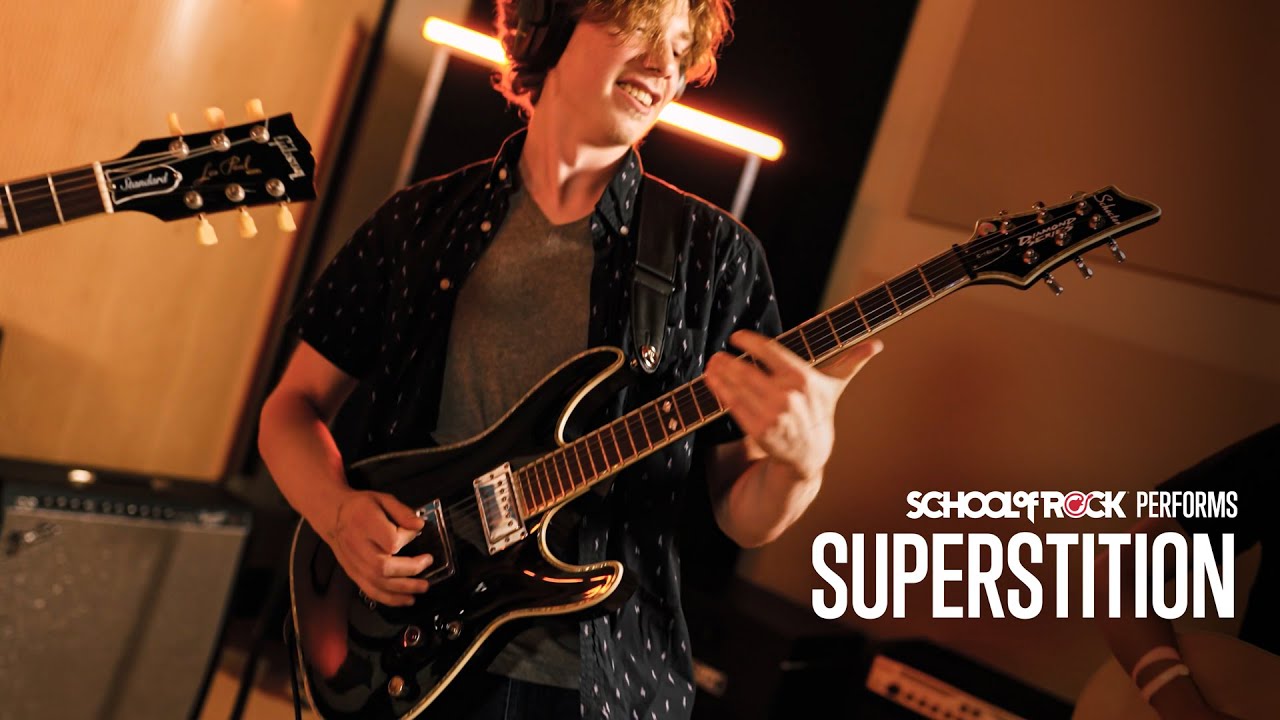
Personally, I will never forget the first time I heard Muddy Waters and his band grooving out of my stereo, or when I first attempted to play one of Robert Johnson’s infuriatingly difficult guitar patterns. Bringing that joy to young musicians today and seeing that spark is one of my favorite parts of working with School of Rock. Long live The Blues!
ABOUT THE AUTHOR
Aidan Curran is the Music Director at School of Rock Dublin, Ireland.